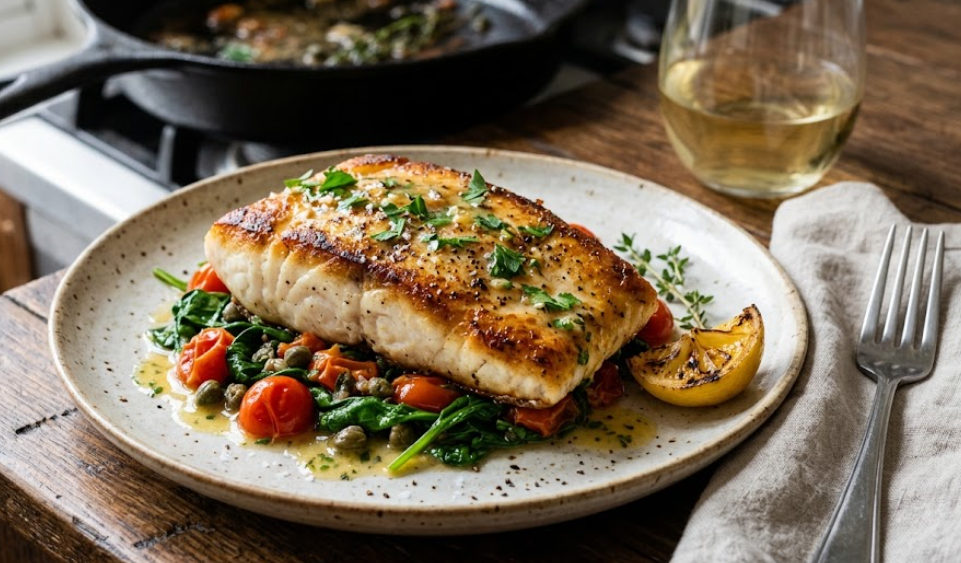
Searing halibut to flaky, tender perfection with a golden-brown crust requires mastering a delicate balance of heat and timing. With Gordon Ramsay’s Best Tender Pan-Seared Halibut Recipe, you can achieve restaurant-quality results in your home kitchen in under twenty minutes. Halibut is a prized, lean white fish renowned for its sweet, mild flavor and firm texture. Because it contains very little fat, improper cooking can quickly dry it out. Chef Ramsay’s proven technique relies on high heat, minimal pan movement, and a quick butter baste with fresh herbs to lock in moisture and yield an exquisite dining experience every single time.
Easy to Intermediate
4
10 mins
8 mins
~320 kcal
18 mins
Why You’ll Love Gordon Ramsay’s Best Tender Pan-Seared Halibut Recipe
Halibut is often intimidating to cook because its low fat content leaves little room for error. However, this pan-searing method eliminates the guesswork. By searing the fish in a shimmering coat of oil before basting it with cold unsalted butter, crushed garlic, and fresh thyme, you protect the delicate flesh from harsh direct heat while coating it in a rich, velvety glaze.
Another reason home cooks adore this recipe is its swift execution. The actual pan time takes less than eight minutes, making it an ideal choice for impressive weeknight dinners or formal dinner parties. Paired with a rapid pan-deglaze of fresh lemon juice, the final result is light, fragrant, and bursting with clean coastal flavor.
Choosing and Preparing Fresh Halibut
Sourcing high-quality seafood is the foundation of any great fish dish. When purchasing halibut for Gordon Ramsay’s Best Tender Pan-Seared Halibut Recipe, consider the following selection and prep guidelines:
- Select Uniform Fillets: Choose center-cut halibut fillets of similar thickness (ideally 1 to 1.5 inches thick). Uniformity ensures all portions cook evenly across the pan without leaving thinner pieces overcooked.
- Check Freshness: Fresh halibut should have translucent, snow-white flesh with a firm texture and a clean, oceanic smell. Avoid fillets with yellowing edges, a strong fishy odor, or soft, mushy flesh.
- Dry the Surface Completely: Surface moisture is the primary cause of sticking and steaming in the pan. Use heavy paper towels to press out excess liquid from all sides of the fillets before cooking.
- Bring to Room Temperature: Cold fish right out of the refrigerator drops the pan temperature drastically upon contact. Allow your seasoned fillets to sit at room temperature for 10 to 15 minutes before cooking.
Essential Equipment for a Perfect Sear
To recreate Gordon Ramsay’s Best Tender Pan-Seared Halibut Recipe with a golden crust, use a heavy-bottomed skillet such as stainless steel, cast iron, or high-grade non-stick. Heavy cookware retains heat evenly, preventing cold spots that cause sticking. Additionally, use a thin metal fish spatula to slip under the crust without tearing the delicate flesh when it comes time to turn the fillets.
How to Know When Pan-Seared Halibut Is Done
Knowing precisely when to pull your fish off the heat ensures the flesh remains moist and tender rather than chalky and dry:
- Visual Cues: The seared side should present an even, deep golden-brown crust. As the heat rises, the translucent white flesh will gradually transform into a solid, opaque pearly white up the sides of the fillet.
- Flake Test: Gently press the top or side of a fillet with a fork or your finger. The fish should yield slightly and show signs of separating into distinct, thick flakes.
- Internal Temperature: For maximum juiciness, insert an instant-read digital thermometer into the thickest part of the fillet. Pull the fish from the skillet when the internal temperature reaches 130°F to 135°F (54°C to 57°C). Residual heat during the 3-minute rest will gently bring it to the recommended 140°F to 145°F (60°C to 63°C) mark.
Recipe Tips for Success
- Preheat the Pan First: Always heat your skillet over medium-high heat before adding oil. Adding cold oil to a cold pan increases the chances of fish sticking to the metal.
- Resist the Urge to Move the Fish: Once the halibut hits the hot oil, leave it untouched for 3 to 4 minutes. Moving the fillet prematurely breaks the developing crust and tears the flesh. The fish naturally releases from the pan once the sear is set.
- Master the Arrosé (Butter Baste): After flipping the fish, add cold unsalted butter, crushed garlic, and fresh thyme sprigs. Tilt the skillet toward you slightly and use a large spoon to rapidly pour the foaming butter over the crust. This technique cooks the fish evenly while infusing garlic-herb aromas into every flake.
- Use High-Smoke-Point Oil First: Do not cook in butter alone from the start. Butter solids burn quickly at high searing temperatures. Start with oil and introduce butter only after flipping.
Common Mistakes to Avoid
- Overcrowding the Skillet: Place only as many fillets as can comfortably fit with at least an inch of space between them. Overcrowding traps steam, turning a crisp sear into a soggy, boiled texture.
- Salting Too Far in Advance: Applying salt too early draws out internal cell moisture, leaving a pool of water on top of the fish. Season generously right before dropping the fillets into the pan.
- Using Excessive Heat During Bastings: Once the butter is added, lower the pan heat slightly to medium-low so the milk solids turn a light brown (beurre noisette) rather than scorching black.
- Skipping the Rest Period: Transfer cooked halibut onto a warm plate and let it rest for 3 minutes before serving. Resting allows the internal juices to redistribute evenly throughout the fillet.
Serving Suggestions
Pan-seared halibut possesses a mild, buttery flavor that harmonizes beautifully with fresh seasonal vegetables and bright citrus sauces:
- Lemon-Butter Pan Sauce: Deglaze the hot skillet after removing the fish with a splash of dry white wine and fresh lemon juice, then swirl in cold butter for a velvety pan sauce.
- Creamy Potato Purée: Serve over a bed of buttery Yukon Gold mashed potatoes or celery root purée.
- Sautéed Greens & Spring Veggies: Pair with charred asparagus, tender baby zucchini, sautéed spinach, or a warm pea and mint salad.
- Grain Bowls: Serve atop fluffy wild rice, lemon herb quinoa, or creamy parmesan risotto for a wholesome, elegant meal.
Storage and Reheating Instructions
Halibut is best served fresh out of the pan. However, leftovers can be handled safely with these steps:
- Storage: Place leftover cooked halibut in an airtight glass container and store in the refrigerator for up to 2 days.
- Reheating: Avoid using the microwave, as it dries out lean fish instantly. Instead, place fillets in a covered baking dish with a splash of water or broth and warm in a 300°F (150°C) oven for 8 to 10 minutes until heated through. Alternatively, warm gently in a skillet over low heat with a knob of butter.
Gordon Ramsay’s Best Tender Pan-Seared Halibut Recipe
Master restaurant-style pan-seared halibut fillets with a golden crispy crust, garlic-thyme butter basting, and a bright lemon pan glaze.
Ingredients
For the Pan-Seared Halibut:
- 4 skinless halibut fillets (approx. 6 oz each, 1 to 1.5 inches thick)
- 1.5 tablespoons high-smoke-point oil (avocado, olive, or canola oil)
- 3 tablespoons cold unsalted butter (cut into cubes)
- 2 cloves garlic (peeled and lightly smashed)
- 3 sprigs fresh thyme
- 1 teaspoon sea salt or kosher salt
- 1/2 teaspoon freshly cracked black pepper
For the Lemon Pan Sauce:
- 1 medium fresh lemon (juiced)
- 2 tablespoons fresh flat-leaf parsley or chives (finely chopped)
Instructions
- Prep and Dry the Fish: Remove halibut fillets from the refrigerator 15 minutes before cooking. Thoroughly pat both sides dry using heavy paper towels.
- Heat the Pan: Place a large, heavy skillet over medium-high heat for 2 to 3 minutes. Add 1.5 tablespoons of oil and swirl to coat. Heat until shimmering and just starting to smoke lightly.
- Season Generously: Season both sides of the halibut fillets with salt and freshly cracked black pepper right before cooking.
- Sear the First Side: Lay the fillets into the hot pan away from you to avoid oil splatters. Leave undisturbed for 3 to 4 minutes until a crisp, deep golden crust develops and the edges turn opaque.
- Flip and Add Butter: Carefully flip the fillets using a thin metal spatula. Turn heat down to medium. Immediately add cold cubed butter, smashed garlic, and fresh thyme sprigs to the pan.
- Butter Baste (Arrosé): As the butter melts and foams, tilt the skillet slightly toward you. Use a large spoon to continuously baste the hot butter over the tops of the fillets for 2 to 3 minutes until the fish is opaque and flakes easily.
- Check Temperature & Add Lemon: Check internal temperature with a digital thermometer; pull at 130°F–135°F (54°C–57°C). Squeeze fresh lemon juice directly over the pan during the last 30 seconds of cooking.
- Rest and Serve: Remove fillets from heat and transfer to a warm serving platter. Let rest for 3 minutes. Spoon remaining hot lemon-butter pan juices over top, garnish with chopped parsley, and serve immediately.
Frequently Asked Questions
Can I use skin-on halibut fillets for this recipe?
Yes. If using skin-on halibut, sear the skin side down first for 4 to 5 minutes until crispy before flipping to finish with the butter baste.
Can I substitute frozen halibut?
Yes, provided the frozen fillets are thawed completely in the refrigerator overnight. Be sure to dry them thoroughly with paper towels to remove excess moisture before searing.
What can I substitute for halibut if it is unavailable?
Other firm, thick white fish fillets work wonderfully with this exact technique, including sea bass, cod, grouper, or mahi-mahi.