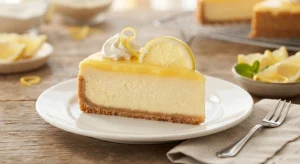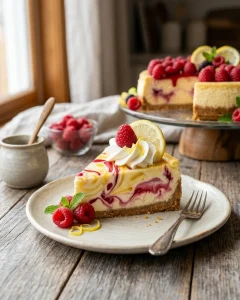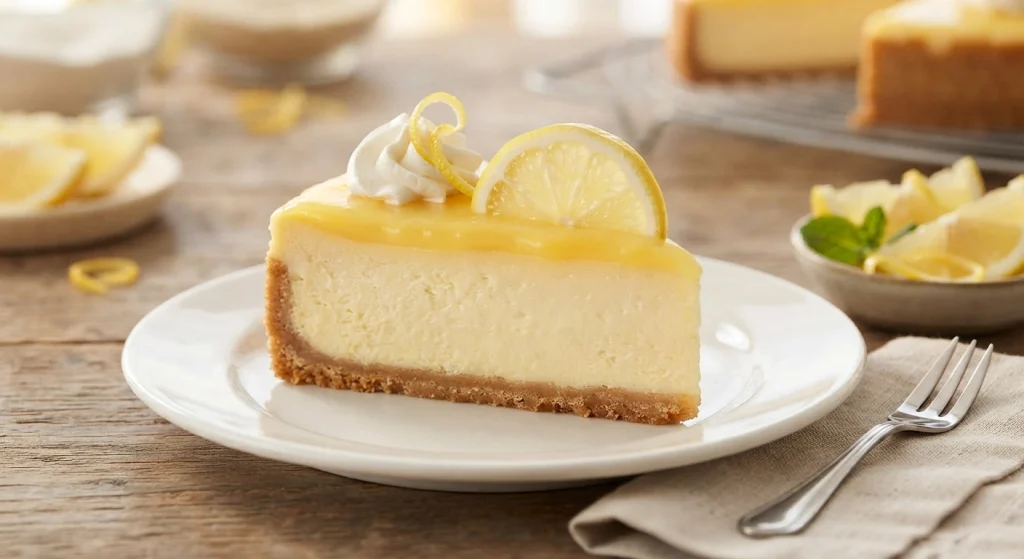
Bright, zesty, and exceptionally creamy, a chef-level baked dessert brings pure sophistication to your home kitchen. Recreating the Gordon Ramsay Best Lemon Cheesecake Recipe combines classic British patisserie precision with pure citrus vibrancy. Featuring a crunchy, toasted biscuit crust, a velvety cream cheese and sour cream filling infused with fresh lemon zest and juice, and an optional crowning layer of glossy lemon curd, this showstopping dessert strikes the ultimate balance of rich indulgence and crisp acidity. By utilizing low-temperature baking and a gentle resting method, you achieve a bakery-flawless, crack-free finish every single time.
Why You’ll Love This Recipe
- Lively Citrus Fragrance: Using both finely grated lemon zest and fresh juice delivers intense citrus perfume that cuts directly through rich cream cheese.
- Dense and Silky Crumb: Gentle, low-speed mixing prevents incorporating excess air, ensuring each forkful remains velvety and luxurious.
- Crunchy, Malty Crust: Blind-baking crushed digestives with melted butter creates a sealed, crisp base that never softens under the filling.
- Effortless Dinner-Party Prep: The cheesecake benefits from an overnight rest in the refrigerator, allowing you to prepare dessert completely ahead of your dinner service.
Chef’s Secrets for an Immaculate Lemon Cheesecake
Creating a cheesecake with an ultra-smooth consistency and an unblemished top requires careful adherence to pastry fundamentals:
- Strictly Room-Temperature Dairy: Cream cheese, sour cream, and eggs must sit on the counter for at least 1 to 2 hours before blending. Cold cream cheese clumps up, forcing you to overmix the batter to remove lumps.
- Zest the Lemons Directly into Sugar: Rubbing fresh lemon zest into the granulated sugar with your fingertips before mixing helps the sugar crystals extract the lemon’s essential oils, perfuming the entire batter evenly.
- Avoid Whipping Air: Mix on the lowest possible speed using a paddle attachment. Trapped air bubbles will expand in the heat of the oven, causing the cheesecake to rise like a soufflé and crack as it contracts.
- Gradual Oven Cooling: Thermal shock is the leading cause of surface tears. Turning the oven off and leaving the cheesecake inside with the door slightly ajar allows the interior temperature to equalize gradually before chilling.
Gordon Ramsay Best Lemon Cheesecake Recipe
Follow these step-by-step instructions to prepare an artisanal baked lemon cheesecake featuring a crunchy biscuit base and a smooth citrus-infused filling.
Ingredients
For the Crust:- 7 oz (200g) digestive biscuits or graham crackers, crushed into fine crumbs
- 5 tablespoons (75g) unsalted butter, melted
- 1 tablespoon granulated sugar
- 1 pinch fine sea salt
- 24 oz (680g / 3 standard blocks) full-fat cream cheese, fully softened to room temperature
- 1 cup (200g) superfine granulated sugar
- 2 tablespoons finely grated fresh lemon zest (from 2 to 3 unwaxed lemons)
- 3 tablespoons freshly squeezed lemon juice
- 3 large eggs, room temperature
- 1 large egg yolk, room temperature
- 1/2 cup (120ml) sour cream or crème fraîche, room temperature
- 1/4 cup (60ml) heavy whipping cream, room temperature
- 1 1/2 teaspoons pure vanilla bean paste or vanilla extract
- 1 1/2 tablespoons all-purpose flour or cornstarch, sifted
- 3 to 4 tablespoons smooth lemon curd
- Fresh raspberries or blackberries
- Thin twists of fresh lemon peel
- Sprigs of fresh mint
Instructions
- Prepare the Pan and Oven: Preheat your oven to 325°F (165°C). Lightly grease a 9-inch (23cm) springform pan with butter and line the bottom with a circle of parchment paper.
- Form and Bake the Crust: In a medium mixing bowl, combine the crushed biscuit crumbs, melted butter, sugar, and sea salt. Stir until the mixture resembles wet sand. Pour into the prepared springform pan and press the crumbs firmly into an even, compact layer across the bottom using the flat base of a measuring cup. Bake for 10 minutes until lightly toasted and fragrant. Transfer to a wire rack to cool completely.
- Infuse the Sugar: Place the granulated sugar and freshly grated lemon zest into a large mixing bowl. Rub the zest and sugar together between your fingertips for 1 to 2 minutes until the sugar becomes fragrant and moist.
- Smooth the Cream Cheese: Add the softened cream cheese to the lemon sugar. Using an electric mixer fitted with the paddle attachment, beat on low speed for 2 to 3 minutes until completely smooth and satiny, scraping down the bowl with a rubber spatula.
- Add Liquids and Thickener: Sift the flour into the bowl. Pour in the sour cream, heavy cream, lemon juice, and vanilla bean paste. Beat on low speed for 1 minute until thoroughly combined and lump-free.
- Gently Fold in Eggs: Add the eggs and egg yolk one at a time, mixing on the lowest speed just until the yellow disappears before adding the next. Do not overmix. Tap the mixing bowl firmly against the countertop two to three times to release any trapped air bubbles.
- Bake to a Soft Wobble: Pour the lemon batter over the cooled biscuit base and smooth the surface with an offset spatula. Place the springform pan on a baking sheet on the center rack of your preheated oven. Bake at 325°F (165°C) for 50 to 55 minutes. The outer 2 inches should be set and lightly puffed, while the center 2 to 3 inches should retain a gentle, soft wobble when gently shaken.
- Phase-Cool in the Oven: Turn off the oven heat. Prop the oven door open about an inch with the handle of a wooden spoon. Allow the cheesecake to rest undisturbed inside the warm oven for 1 hour. This slow cooldown prevents surface cracks.
- Release the Edges and Chill: Remove the pan from the oven. Carefully run a thin, flexible palette knife around the inside perimeter of the pan to ensure the cheesecake does not cling as it cools and shrinks. Cool to room temperature on a wire rack for 1 hour, then cover loosely and refrigerate for at least 4 hours, or preferably overnight.
- Unmold, Decorate, and Serve: Unlatch and remove the springform ring. Spread a thin, glossy layer of lemon curd across the top if desired, then garnish with fresh raspberries, lemon twists, and fresh mint sprigs. Slice with a sharp knife warmed under hot water and wiped dry between cuts for clean portions.
How to Know When Your Cheesecake Is Done
Cheesecake should never be baked until fully solid across the surface. Carryover heat finishes setting the center during cooling, ensuring a creamy texture:
- The Wobble Test: Gently nudge the edge of the pan with an oven mitt. The perimeter should be set and stable, while the center should gently quiver like set gelatin.
- Satin Sheen: The raw, glossy shine of the wet batter will transform into a delicate, matte-satin finish across the top surface.
- Avoid the Toothpick Test: Never insert a knife or toothpick into the center of the cheesecake. Puncturing the delicate custard creates a fault line that quickly splits open as the cake cools.
Common Mistakes to Avoid
- Using Cold Ingredients: Cold blocks of cream cheese will leave tiny white lumps that cannot be smoothed out without overworking the batter.
- High-Speed Beating: Whipping the batter rapidly forces air pockets into the dairy, which expand in the oven and cause the cake to rise and collapse into large fissures.
- Using Bottled Lemon Juice: Bottled juice lacks the vibrant essential oils of fresh fruit and carries an artificial, bitter tang. Always use freshly squeezed lemons.
- Skipping the Oven Resting Stage: Rushing the cheesecake directly from the hot oven into a cold room creates thermal shock, pulling the edges apart and cracking the surface.
Serving Suggestions
The bright citrus notes of this dessert make it a refreshing finale for dinner parties and holiday feasts:
- Fresh Berry Medley: Serve with a handful of fresh raspberries, blackberries, or blueberries tossed in a teaspoon of powdered sugar.
- Warm Beverages: Pair alongside an espresso, a velvety cappuccino, or hot Earl Grey tea with bergamot notes.
- Chilled Dessert Wine: Complements a glass of chilled Limoncello, late-harvest Riesling, or sparkling Italian Prosecco.
Storage and Freezing Instructions
Refrigeration: Keep leftover cheesecake covered in an airtight container or cake keeper in the refrigerator for up to 5 days. Keep it away from strong refrigerator odors.
Freezing: Once fully chilled and set, the cheesecake can be frozen plain (without the lemon curd or fresh fruit topping). Wrap the whole cake or individual slices tightly in plastic wrap, followed by a layer of aluminum foil. Freeze for up to 2 months. Thaw overnight in the refrigerator before slicing and garnishing.
Frequently Asked Questions
Do I need a water bath for this recipe?
No water bath is necessary. The combination of gentle 325°F baking, the moisture from sour cream, a touch of flour to stabilize the egg proteins, and the gradual 1-hour rest inside the turned-off oven guarantees a silky, crack-free cake without the hassle of a water bath.
Can I substitute graham crackers for digestive biscuits?
Yes. Digestive biscuits offer a slightly malty, toasted flavor typical of Gordon Ramsay’s British roots, but standard honey graham crackers work interchangeably in equal weight.
Can I make this cheesecake ahead of time?
Yes. In fact, it tastes even better the next day after the flavors have had time to meld and the texture has completely set in the refrigerator.