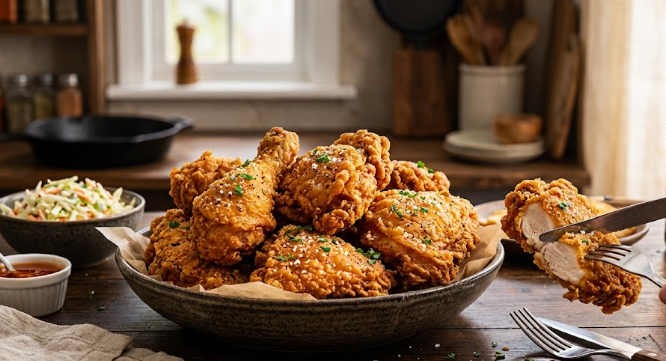
Achieving shattering, golden-crisp skin over tender, hyper-succulent chicken is the holy grail of comfort food. Following master-chef techniques, this guide breaks down how to make the ultimate Gordon Ramsay Best Fried Chicken Recipe right in your home kitchen. By utilizing a buttermilk brine, a multi-layered spice coating, and precise frying temperatures, you can serve restaurant-grade fried chicken that stays incredibly juicy on the inside with a crunchy crust that never turns soggy.
Why You’ll Love This Recipe
Fried chicken can easily go wrong—ending up greasy, bland, or burnt on the outside while undercooked near the bone. This method solves every common frying pitfall with foolproof professional techniques.
- Unmatched Tenderness: An overnight acidic buttermilk soak breaks down tough muscle fibers, guaranteeing meat that remains moist and tender even after frying.
- Shatteringly Crispy Crust: Double-dredging in a custom-seasoned flour and spice blend creates textured, ruffled edges that crisp up into a satisfying crunch.
- Balanced Seasoning: Smoked paprika, garlic powder, cayenne pepper, and Dijon mustard provide flavor through every single layer—from the brine to the outer coating.
- Reliable Cooking Guidance: Clear instructions on oil temperature management prevent raw centers and burnt skin.
The Secret Behind Chef-Level Fried Chicken
The core secret behind the Gordon Ramsay Best Fried Chicken Recipe lies in two primary steps: acidic marination and layered seasoning. Buttermilk contains natural lactic acid and enzymes that break down protein structure without leaving the meat rubbery or mushy. Adding Dijon mustard to the marinade injects extra acidity and depth, giving the chicken a subtle savory tang.
Furthermore, seasoning the flour mixture generously ensures the exterior tastes just as rich and flavorful as the meat inside. Splashing a few tablespoons of buttermilk directly into your dry flour dredge creates little crumbles that turn into extra-crispy bits during frying.
Choosing and Preparing the Poultry
For authentic fried chicken, bone-in, skin-on cuts are strongly recommended. Dark meat pieces like drumsticks and thighs retain moisture best and resist drying out during deep frying.
Prepping and Trimming
- Select the Cut: Use a mix of bone-in chicken thighs and drumsticks, or cut a whole 3-to-4-pound chicken into 8 to 10 manageable pieces.
- Pat Dry First: Before transferring the chicken into the liquid brine, pat the raw pieces dry with paper towels so the marinade penetrates deeply.
- Bring to Room Temp Before Frying: Never drop stone-cold chicken straight from the refrigerator into hot oil. Cold meat drastically drops the oil temperature, leading to greasy, soggy crusts. Let marinated chicken sit on the counter for 20 to 30 minutes prior to dredging.
Step-by-Step Instructions
Ingredients
For the Buttermilk Marinade:
- 3 lbs (approx. 1.4 kg) bone-in, skin-on chicken pieces (thighs and drumsticks)
- 2 cups (480 ml) cold buttermilk
- 1 tbsp Dijon mustard
- 1 tsp fine sea salt
- 1 tsp freshly ground black pepper
- 1 tsp cayenne pepper
For the Crispy Dredge Coating:
- 2 cups (240 g) all-purpose flour
- 1/2 cup (60 g) cornstarch (for extra crispness)
- 1 tbsp baking powder
- 1 tbsp garlic powder
- 1 tbsp onion powder
- 2 tsp smoked paprika
- 1 tsp cayenne pepper (adjust to taste)
- 1 1/2 tsp kosher salt
- 1 tsp freshly ground black pepper
- 4 cups neutral cooking oil with high smoke point (canola, peanut, or vegetable oil)
Gordon Ramsay Best Fried Chicken Recipe
- Marinate the Chicken: In a large mixing bowl or zip-top bag, whisk together the buttermilk, Dijon mustard, salt, black pepper, and cayenne pepper. Submerge the chicken pieces in the marinade, ensuring every surface is coated. Cover and refrigerate for at least 4 hours, ideally overnight (up to 24 hours).
- Prepare the Flour Coating: In a wide, shallow bowl or rimmed tray, whisk together the all-purpose flour, cornstarch, baking powder, garlic powder, onion powder, smoked paprika, cayenne pepper, salt, and black pepper. Drizzle 2 to 3 tablespoons of the buttermilk marinade into the dry flour and mix with a fork to form small, shaggy flakes.
- Dredge the Chicken: Remove one piece of chicken from the buttermilk, letting excess liquid drip off. Place into the flour mixture, pressing firmly on all sides so the coating adheres to every crevice. For an ultra-crispy double coating, dip the chicken back into buttermilk briefly, then press into the flour mixture a second time. Place breaded pieces on a baking sheet lined with parchment paper and rest for 10 minutes to let the coating set.
- Heat the Oil: Fill a heavy cast-iron skillet, Dutch oven, or deep fryer with about 2 inches of neutral cooking oil. Heat over medium-high until the oil reaches 350°F (175°C) on a deep-fry or candy thermometer.
- Fry in Batches: Carefully lower 3 to 4 pieces of chicken into the hot oil using tongs. Do not crowd the pan. Fry for 12 to 16 minutes, turning pieces occasionally with tongs, until the crust turns deep golden brown. Dark meat (thighs/drumsticks) requires roughly 14–16 minutes, while breast pieces take about 12–14 minutes.
- Check Temperature: Insert an instant-read digital meat thermometer into the thickest part of the chicken without touching the bone. The internal temperature must reach 165°F (74°C).
- Drain and Rest: Transfer fried chicken pieces to a wire cooling rack set over a rimmed baking sheet. Immediately sprinkle with a light pinch of sea salt while hot. Allow the chicken to rest for 5 to 7 minutes before serving so the crust sets and juices redistribute.
Checking Doneness and Food Safety
Relying solely on outer crust color can be deceiving—fried chicken often looks golden-brown on the outside while remaining undercooked near the bone. Using an instant-read food thermometer is the only guaranteed way to ensure safety and quality:
- Safe Internal Temperature: Poultry must reach an internal temperature of 165°F (74°C).
- Insertion Technique: Slide the thermometer probe into the thickest section of the thigh or breast, staying clear of bone, which can cause an inaccurate high reading.
- Visual Indicators: Juices running from the chicken should be completely clear, never pink or cloudy.
Resting and Serving Suggestions
Resting fried chicken on paper towels traps steam beneath the crust, resulting in a soggy bottom layer. Always transfer hot pieces onto an elevated wire cooling rack so air circulates freely beneath the chicken.
Classic Pairings
- Spicy Honey Glaze: Drizzle warm honey infused with a dash of hot sauce or cayenne pepper over the chicken right before serving.
- Tangy Coleslaw: Serve alongside a crunchy, vinegary cabbage slaw to cut through the richness of the fried crust.
- Pickles & Jalapeños: Pair with chilled dill pickle slices or pickled jalapeños for a classic Southern touch.
- Mashed Potatoes or Biscuits: Creamy garlic mashed potatoes or flaky butter biscuits make complete, comforting side dishes.
Storage and Reheating Guidelines
- Refrigeration: Allow fried chicken to cool completely, then place in an airtight container lined with paper towels. Refrigerate for up to 3 to 4 days.
- Reheating in the Oven: Preheat your oven to 375°F (190°C). Arrange leftover pieces on a wire rack over a baking sheet and bake for 12 to 15 minutes until piping hot and re-crisped.
- Reheating in an Air Fryer: Place pieces in an air fryer basket at 360°F (180°C) for 4 to 6 minutes. Avoid using microwaves, which soften the crust and make the meat rubbery.
Common Mistakes to Avoid
- Skipping the Buttermilk Soak: Frying unmarinated chicken yields dry, tough meat with little flavor depth.
- Crowding the Frying Pan: Adding too many pieces at once drastically drops oil temperature, causing the breading to absorb excess oil and turn greasy.
- Overheating the Oil: Frying at temperatures above 375°F (190°C) scorches the outer flour coating long before the meat cooks through near the bone.
- Draining on Flat Paper Towels: Trapped steam on flat surfaces makes the bottom crust soft and soggy within minutes.
Frequently Asked Questions
Can I make this recipe using skinless chicken breasts?
Yes, though boneless skinless chicken breasts cook faster than bone-in pieces. Slice large breasts in half horizontally for even cooking, and fry for roughly 8 to 10 minutes until they reach an internal temperature of 165°F (74°C).
What is the best oil for deep frying chicken?
Choose high-smoke-point, neutral-flavored oils such as peanut oil, canola oil, or vegetable oil. Peanut oil is widely favored by professional chefs for its clean taste and heat stability.
Why is my breading falling off during frying?
Breading separates if the chicken is too wet before dredging, if excess flour isn’t shaken off, or if you turn the chicken too frequently during the first few minutes in the oil. Letting breaded chicken rest on a baking sheet for 10 minutes before frying helps the flour adhere firmly.
Can I bake or air fry this buttermilk fried chicken?
Yes. For air frying, preheat the basket to 380°F (190°C), generously spray the breaded chicken with cooking oil spray on all sides, and cook for 20 to 22 minutes, flipping halfway through until crisp and fully cooked.