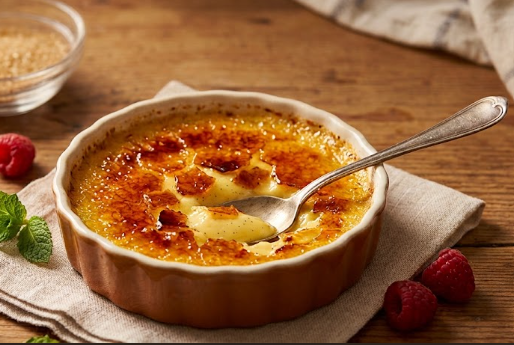
Indulge in the ultimate classic French dessert with a rich, silky custard base and a crisp, caramelized sugar top that cracks effortlessly under your spoon. Mastering the Gordon Ramsay Best Creme Brulee Recipe brings restaurant-grade elegance directly to your home kitchen using simple ingredients, precise temperature control, and time-honored pastry techniques.
Why You’ll Love This Recipe
Creating a magnificent crème brûlée at home often feels intimidating, but Chef Ramsay’s approach streamlines the process into clear, manageable steps. By focusing on gentle heat and quality vanilla infusion, you achieve a velvety finish every single time.
- Perfect Textural Contrast: A smooth, chilled custard foundation meets a piping-hot, brittle glass top made from caramelized sugar.
- Pure Vanilla Flavor: Utilizing whole vanilla beans infuses a depth of aromatic warm spices that artificial extracts simply cannot match.
- Ideal Make-Ahead Dessert: The baked custard bases must chill for several hours, making this the perfect sweet course to prepare a day in advance for dinner parties.
- Minimal Ingredients: Requires basic kitchen staples—heavy cream, egg yolks, sugar, and vanilla—proving that exceptional technique yields extraordinary results.
Selecting and Preparing Your Ingredients
Because this dessert relies on a short ingredient list, each element plays a crucial role in achieving the signature texture and mouthfeel.
Heavy Cream vs. Milk
Always opt for heavy cream or heavy whipping cream with a high milk fat content (around 36% to 40%). Avoid subbing low-fat milk or half-and-half, as the excess water content prevents the custard from setting softly and leads to a watery texture.
Fresh Vanilla Beans
Whole Madagascar or Tahitian vanilla beans provide the best aromatic profile and classic black speckles throughout the custard. Split the bean lengthwise with a sharp paring knife and scrape out the aromatic seeds directly into the cream. If vanilla beans are unavailable, high-quality vanilla bean paste makes a fantastic 1:1 substitute.
Step-by-Step Instructions
Ingredients
- 2 cups (480ml) heavy cream
- 1 whole vanilla bean, split lengthwise and seeds scraped (or 1.5 tsp vanilla bean paste)
- 5 large egg yolks, room temperature
- 1/3 cup (65g) superfine sugar (caster sugar), plus extra for caramelizing
- 1 pinch fine sea salt
- Boiling water for the water bath (bain-marie)
Gordon Ramsay Best Creme Brulee Recipe
- Infuse the Cream: Pour the heavy cream into a heavy-bottomed saucepan. Add the scraped vanilla bean seeds along with the split bean pod. Set over medium heat and bring the mixture just to a gentle simmer (do not let it boil). Remove from heat, cover, and allow it to steep for 10 to 15 minutes.
- Preheat and Prepare Ramekins: Preheat your oven to 300°F (150°C). Place four 6-ounce shallow ceramic ramekins inside a deep baking dish or roasting pan.
- Whisk the Yolks and Sugar: In a medium mixing bowl, whisk together the egg yolks, 1/3 cup superfine sugar, and a pinch of salt until smooth and combined. Avoid whisking too vigorously to prevent creating excess air bubbles.
- Temper the Mixture: Remove the vanilla pod from the warm cream. Pour a small stream of warm cream into the egg yolk mixture while whisking continuously. Gradually pour in the remaining cream. Tempering prevents the egg yolks from scrambling upon contact with heat.
- Strain for Smoothness: Pass the liquid custard through a fine-mesh sieve into a clean glass measuring cup or pitcher. This removes any small cooked egg particles or air bubbles, ensuring an impossibly smooth custard.
- Bake in a Water Bath (Bain-Marie): Divide the custard evenly among the prepared ramekins. Place the roasting pan on the middle oven rack. Carefully pour boiling water into the roasting pan around the ramekins until it reaches halfway up their sides.
- Bake and Test Doneness: Bake for 30 to 35 minutes. The custards are done when the edges are set but the centers still wobble slightly when gently shaken (similar to gelatin). The internal temperature should reach approximately 170°F to 175°F (77°C–79°C) on an instant-read thermometer.
- Chill Completely: Remove ramekins from the water bath and cool to room temperature on a wire rack. Cover loosely with plastic wrap and refrigerate for at least 3 to 4 hours, or overnight, until completely firm and chilled.
- Caramelize the Sugar Top: Just before serving, sprinkle an even layer of superfine sugar (about 1 teaspoon per ramekin) across the top of each chilled custard. Pass a kitchen blowtorch evenly over the surface until the sugar melts, bubbles, and turns a deep amber color. Allow the sugar to harden for 2 to 3 minutes before serving.
How to Know When It Is Done
Achieving the ideal consistency relies heavily on taking the custards out of the oven at the exact right moment. Overbaking leads to curdled, grainy eggs, while underbaking leaves the center liquid.
- The Gentle Jiggle Test: Nudge the side of a ramekin gently. The outer edges should feel firm and set, while a quarter-sized area in the center should jiggle subtly.
- Temperature Check: If using a digital instant-read thermometer, insert it carefully into the center. The target temperature for a baked egg custard is between 170°F and 175°F (77°C–79°C).
The Secret to the Perfect Sugar Crust
The defining element of the Gordon Ramsay Best Creme Brulee Recipe is the brittle, golden sugar crust that shatters under a spoon.
- Use Superfine (Caster) Sugar: Finer granules melt quickly and evenly under flame without scorching compared to coarse granulated sugar.
- Thin, Uniform Layer: Tilt and tap the ramekin to distribute sugar edge-to-edge. Wipe away excess sugar from the ceramic rim to prevent burning.
- Torch Technique: Keep the flame moving constantly in circular motions about 2 to 3 inches away from the sugar. Sweeping gently prevents hot spots and uneven darkening.
- Alternative Broiler Method: If you don’t own a kitchen torch, place the chilled ramekins into an ice bath and set them directly under a preheated oven broiler on high for 1 to 2 minutes, watching constantly.
Serving Suggestions
- Fresh Berries: Top the hardened sugar shell with fresh raspberries, blackberries, or sliced strawberries to add a refreshing tart contrast.
- Citrus Zest: Grate fresh orange or lemon zest over the cream before baking to introduce bright citrus undertones.
- Fresh Mint: Garnish with a small mint sprig alongside crisp shortbread biscuits.
Storage and Reheating
- Refrigeration: The baked, un-caramelized custards can be covered tightly with plastic wrap and stored in the refrigerator for up to 3 days.
- Caramelize Fresh: Never torch the sugar topping until immediately before serving. Once torched, moisture from the custard will soften the caramelized sugar within 20 to 30 minutes.
- Freezing: Freezing is not recommended, as thawing breaks the delicate emulsion and causes the custard to weep liquid.
Common Mistakes to Avoid
- Skipping the Water Bath: Baking ramekins directly on a sheet pan overheats the custard edges, turning them rubbery before the center cooks. The water bath insulates and gently cooks the cream.
- Incorporating Too Many Air Bubbles: Whisking egg yolks and sugar aggressively creates foam on top of the custard. Pop residual bubbles with a kitchen torch flame before baking to keep the surface smooth.
- Torching Warm Custard: Always ensure the custards are thoroughly chilled before caramelizing the sugar layer; otherwise, the heat melts the center, leaving it runny.
- Piling on Excessive Sugar: Adding too much sugar creates a thick, rock-hard layer that is difficult to break and burns before melting through.
Frequently Asked Questions
Can I make crème brûlée without a torch?
Yes. You can use your oven’s broiler setting on high. Set the chilled ramekins into a baking pan filled with ice water to protect the cold custard underneath, and place them on the top rack under the broiler until caramelized.
Why is my crème brûlée liquid in the center?
If the custard remains runny after cooling, it was either underbaked or did not chill long enough in the refrigerator. Ensure the center reaches 170°F (77°C) during baking and rests for a minimum of 3 to 4 hours in the fridge.
Can I substitute vanilla extract for whole vanilla bean?
Yes. Substitute 1 to 1.5 teaspoons of pure vanilla extract or vanilla bean paste. Stir it into the cream mixture after removing it from the heat source.